The Snug
Articles
Craft · 2 min read
Peat and Smoke: Where the Flavour Comes From
What peat is, what parts per million really measure, and why smoke from Islay and Orkney tastes different.
Listen to this article
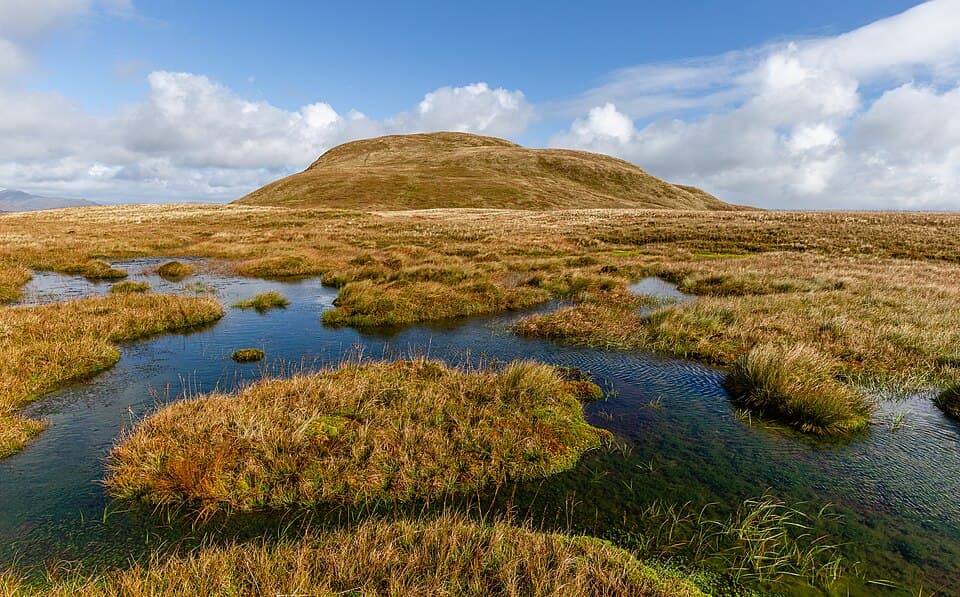
Peat is waterlogged plant matter, mostly sphagnum moss, heather and grasses, that has built up in bogs over thousands of years. Cut, dried and burned in a kiln, it was once the main fuel many Scottish distilleries had for drying malted barley. The smoke leaves compounds called phenols on the grain, and they survive into the finished whisky as smoke, tar, iodine or something like a bonfire.
Peating is measured in phenol parts per million, usually taken on the malt before it's mashed. Unpeated malt is close to zero. Lightly peated malt, like Benromach's, sits at around 10. The big Islay names mostly fall somewhere between 30 and 55, with Lagavulin and Caol Ila towards the lower end and Ardbeg at the top. Bruichladdich's Octomore has gone past 300.
The number on the malt isn't what ends up in your glass, though. A large share of the phenols is lost in the still, often more than half, and how much survives depends on where the stillman makes the cut, since many of the heavier smoky compounds come through late in the run. They keep softening in the cask for years too. A heavily peated 25 year old can be gentler than a young whisky made from far less smoky malt, so ppm comparisons only go so far.
Where the peat comes from matters as well. Research at Heriot-Watt University by Barry Harrison found that peat from Islay, Orkney and the mainland differs in its chemical make-up, because different plants grew in each bog. Islay peat tends to give the tarry, medicinal smoke people associate with Laphroaig. Highland Park cuts its own peat on Orkney at Hobbister Moor, and its smoke is softer and more heathery. Mainland peat leans towards a sweeter bonfire.
To taste the difference, pour Highland Park 12 (around £40) next to Laphroaig 10 (about £40). Both are peated, but one smells of heather honey and a distant fire and the other of a seaside first-aid kit. Add Benromach 10 (around £45) if you want to see how little peat it takes to notice.
In The Snug
More to read
Craft · 2 min read
How to Read a Whisky Label
What each line on a Scotch label means, which ones the law requires, and which are optional extras.
Craft · 2 min read
Understanding Age Statements
What the number on a Scotch label legally means, and what it means when there isn't one.
Craft · 2 min read
Cask Types and Their Influence
Ex-bourbon, sherry, port and virgin oak: what each kind of cask does to the spirit inside it.
Keep going in The Snug
Read it, then pour it.
The Snug in the Dramour app has every article read aloud, the Between Drams podcast and recipes from your shelf, and picks up where you left off. Ask Dramcierge for a bottle to taste what you've just read about.