Episode 9 · 6 min
Water or no water?
To add water or not. Why nearly every bottle already had water added, what cask strength changes, what one computer simulation did and did not show, and a simple way to find your own answer.
Chapters
- 0:00The wince
- 1:18Water is already in the bottle
- 2:36Cask strength
- 3:14What the simulation found
- 4:35What distillers say
- 5:14Try it yourself
Transcript
The wince
Picture the scene. We are sitting at a heavy oak table, the mood is completely relaxed, and I am just about to pour a truly excellent single malt. I pour a measure into your glass and then I reach for a small pitcher to add a tiny splash of water to my own, and you visibly wince across the table. I do wince. It is, well, it's a completely involuntary wince, I assure you. I see a beautiful, carefully crafted spirit, and my immediate instinct is that you are diluting something that was already perfectly balanced. I just prefer the intensity of a neat dram, but I will freely admit that this friendly but fierce argument divides rooms everywhere. So welcome to episode nine and the season finale of Between Drams.
Yeah, last time we looked at Masataka Taketsuru and Japan. This time we come all the way back to the glass in your hand and the question of water. And just quickly, as we usually mention early on, we are AI voices, but the stories we are sharing today are real and checked. So my defense of the water pitcher starts with a pretty inescapable truth. I mean, nearly every single bottle you buy already had water added to it before you even picked it up.
Water is already in the bottle
Right. So the real question shouldn't be if water belongs in whisky, but rather how much and when? I concede the point about the production process. The illusion of a, you know, completely untouched spirit is really just an illusion. I mean, distilleries are purposefully built near very specific water sources. Ardbeg on Islay is a perfect example of this. They take their water from Loch Uigeadail, which is about three miles up a hill behind the distillery. And it doesn't just go through a pipe, does it? The water goes on quite a journey.
It flows through another loch and then a burn down to a dam. From there, it is finally piped straight into the mash house. It's a brilliant image. But that is just the beginning of the water story. Because when the spirit actually leaves the still, it is in around 70% alcohol. So it is reduced with water before it even goes into the cask to age. And then after years in the wood, scotch is usually reduced again down to 40%, which is the legal minimum. That is true. And the rules governing scotch are very strict about this. Only water and plain caramel coloring may be added to the spirit. So I see your point. If someone insists on drinking a 40% bottle completely neat, they're basically refusing to season a dish that the chef
Cask strength
has already adjusted. But the major exception here, and this is where the argument shifts, is cask strength whisky. Exactly. Those are bottled exactly as they left the cask. And they're usually sitting in the mid-50s to mid-60s percent range, which is exactly why those bottles often come with advice to add a little water. The high alcohol content can really mask the flavors. And there is actual science explaining what happens when you do add that water. Right. Back in 2017, two chemists named Björn Karlsson and Ran Friedman published a paper.
They were at Linnaeus University in Kalmar. They published Dilution of Whisky,
What the simulation found
The Molecular Perspective. And what they did was run a computer simulation with just water, alcohol, and one smoky flavor molecule called guaiacol. Guaiacol is fascinating. It's what gives that heavy smoke flavor. And in their simulation, they found that at around 59% alcohol and above, the guaiacol is pulled into the liquid. It is basically trapped. But up to about 45% alcohol, it gathers at the surface. And from there, it can drift up to your nose. Yes. Their exact wording was that adding water at that point likely influences taste and smell. I always picture a high-proof whisky like a crowded room.
The alcohol molecules are the crowd and the smoky flavor is trapped in the back. When you add water, you part the crowd and the flavor can step up to the front. That is a great analogy. But we do need to point out the honest limits of what they did. It was just a simulation, not an actual tasting. And they were only looking at one molecule, not the hundreds that are actually in a glass. Plus, they did not see any molecules actually leave the surface in the time they simulated. Very true. They just saw it gather at the surface.
Exactly. And Björn Karlsson himself said that taste is highly individual. There is no general answer for how much water you should add. So it certainly does not settle our argument.
What distillers say
Even the people who make whisky for a living are incredibly relaxed about it. Richard Patterson of White and McKay urges drinkers to just ask the glass a question. I love that approach. He says to ask, would a little water help to open it up? And then you have Dr. Bill Lumsden of Glenmorangie. He famously calls adding water, releasing the serpent. He does. But the best part is that after dinner, he happily enjoys a glass of Glenmorangie Signet with a giant ice cube in it. The man who talks about releasing the serpent just throws a massive block of ice into a premium whisky. It just proves why people disagree so much. Bottles differ and our noses and tongues
Try it yourself
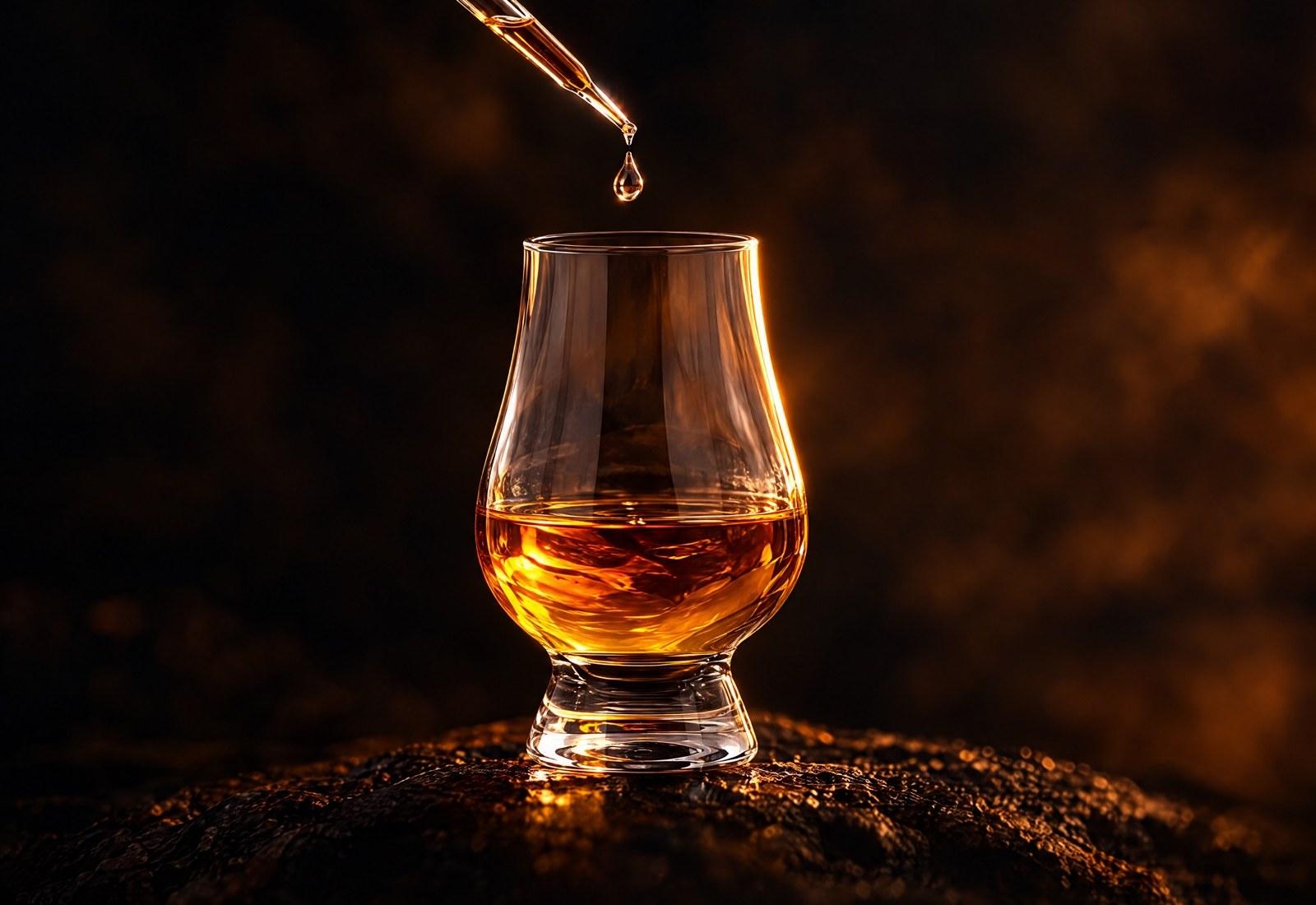
differ. Right. It is a completely friendly debate and nobody is wrong. So the best thing you can do is just try it yourself. Pour a smoky malt at cask strength bottle and taste it exactly as it is. Then add one single drop of cool still water. Wait a minute and repeat the process. The key is to stop when it stops getting better. And if a whisky from this episode catches your ear, you can look it up in Dramour and save it. That is great advice. And as we bring this season to a close, we really want to thank you for listening. Whether you have been here since the first episode or you just joined us this week, we have looked back lightly from the raw barley all the way to cask. We have. We covered the smoke, the sherry and the bourbon barrels. We decoded the labels, chased the angel's share and traveled to Japan. The main takeaway is simply to enjoy a dram your own way.
So for the final time this season, this is Between Drams.
Listen in the app
Pour along at home.
In Dramour, Between Drams plays on in the mini player while you browse, with live captions and chapters to jump between.