Episode 7 · 9 min
Whisky by numbers
Why a bottle can have a number where the distillery should be. The Scotch Malt Whisky Society, how its codes work, the tasting panel, and the poetry of notes like bacon on a bonfire.
Chapters
- 0:00A bottle with no name
- 1:13Pip Hills and the first cask
- 2:28The Vaults in Leith
- 3:02Why hide the distillery?
- 4:10How the codes work
- 4:45The tasting panel
- 5:57Bacon on a bonfire
- 7:06The Society today
- 7:40How to try one
Transcript
A bottle with no name
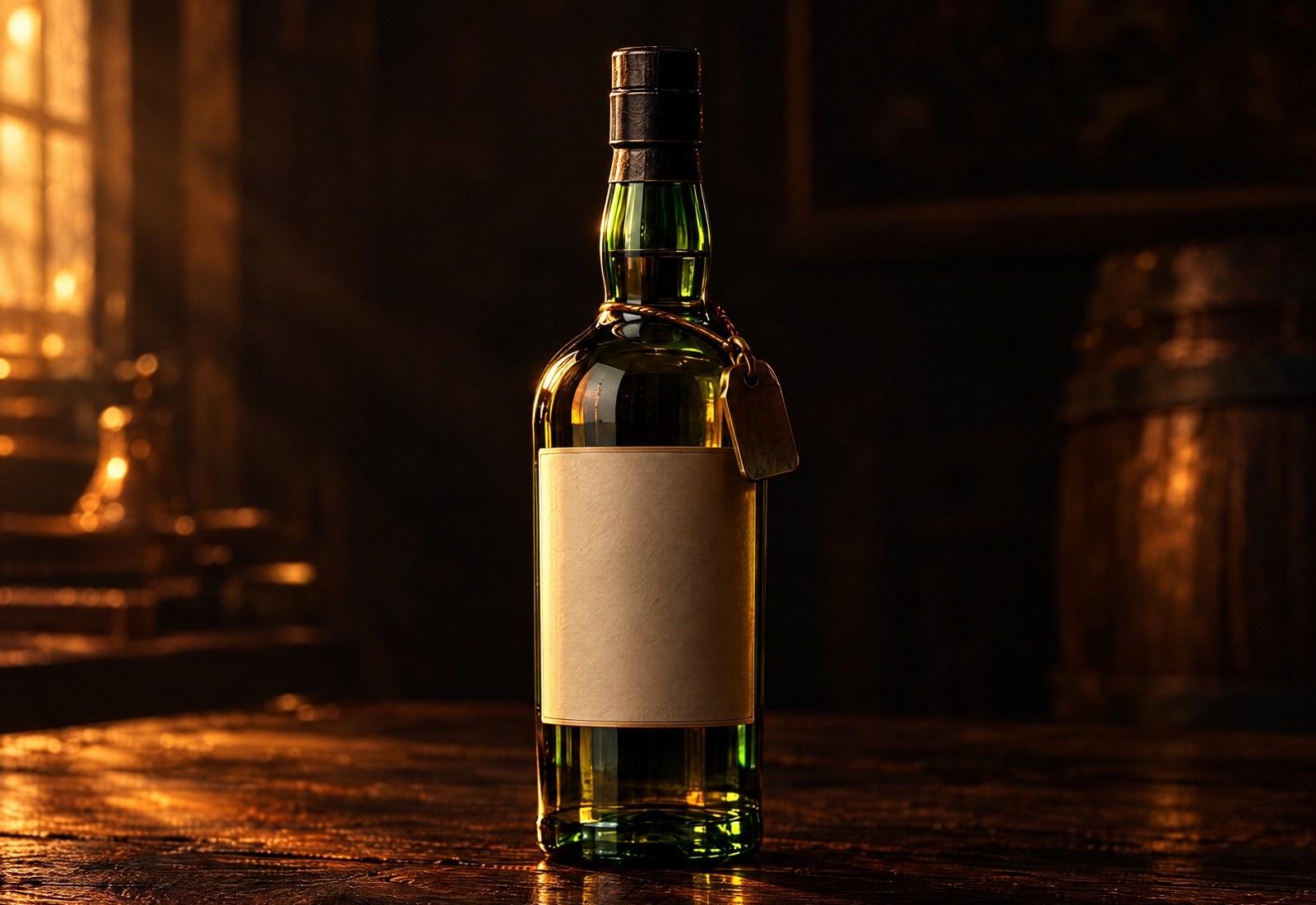
I want you to just imagine picking up a heavy glass bottle of whisky. You turn it around in your hands and you realize there's absolutely no distillery name printed anywhere on the label. Instead, sitting right there where you'd normally expect to see a world famous brand, there is just this cryptic code. You might see a number like 29.24 or maybe 93.140. And then right beneath those numbers, there's a title that sounds, well, it sounds way more like a surreal short poem than a flavor profile. You might see something like bacon on a bonfire staring back at you, which is always a fun one to find.
It really is. But it immediately makes you wonder what exactly is sitting inside this bottle. Who on earth writes these bizarre labels and, you know, what those mysterious numbers actually mean. So welcome to Episode 7 of Between Drams. Glad to be here for this one. Last time we talked all about the angel's share, looking at what a cask takes from the spirit and what it gives back while the whisky sleeps. But this time we are looking at a society that bottles single casks and completely hides the distillery behind a number.
And just before we get going, I'll state clearly just once that the hosts are AI voices and
Pip Hills and the first cask
the stories are real and checked. So to really understand how you end up holding a bottle labeled bacon on a bonfire, we have to go back to Edinburgh in 1983. That is when a man named Philip Hills, though everyone pretty much just called him Pip, decided to turn a personal passion into something much larger. He was an accountant, but he had a very specific taste for whisky straight from the cask. Which was pretty unusual back then, wasn't it? Oh, absolutely. The industry in the early 1980s considered cask strength whisky to be entirely too quirky and way too challenging for normal palates.
They thought he was just too aggressive. Exactly. But Hills loved it. And there are actually two different versions of the story of how he got his hands on that very first cask. One version says that in 1978, he convinced a group of friends to all chip in for a Glen Farclas cask after he tasted some in the Highlands. Okay, I like that. But the other version claims the key tasting happened a little later in an Aberdeenshire farmer's house in the early 1980s. It's kind of like a wonderfully analog version of modern crowdfunding, really, you know, getting friends to pitch in on a barrel of strong, unfiltered whisky just for the love
The Vaults in Leith
of the liquid. Yeah, that's exactly what it was. And the bottles were just handed around until the whole thing organically formalized into a proper society in 1983. So they have this society, but they must have needed a place to actually keep all this whisky. They did. A growing society of friends sharing casks needed a home. So in 1983, the society bought The Vaults on Giles Street in Leith. Which is the old port district of Edinburgh, right? Exactly. These were old wine cellars. They converted the space to include members rooms, and it has essentially been their spiritual home ever since.
Why hide the distillery?
So they had the whisky and they had this incredible building. But that brings us right back to the bottle I mentioned at the start. Why hide the name of the distillery? I have to say I'm a little skeptical about this. How so? Well, was this just a clever, romantic philosophy about blind tasting, or was it a strict legal necessity? Because you hear that trade pressure was the real driving force. It's a bit of a mix, really. As the story goes, the trade was definitely awkward about it. Some distilleries supposedly only sold casks if the buyer agreed not to name them, just to protect their brand image.
That makes sense from a corporate standpoint. It does. But the society also had its own philosophy, which is that a single cask tastes very, very different from a distillery's usual house bottle. Because it's not blended to a specific profile. Right. If a label says Laphroaig, you arrive with the preconceived picture in your head of what it will taste like. A simple number forces you to actually judge what is in the glass. Okay, I can appreciate the idea of a blind taste test, but if you can't put a name on the bottle, you obviously need a system to organize them.
And they came up with a really clever one.
How the codes work
It is just two numbers separated by a dot. The first number is the distillery, and it was assigned in the order the society first bottled them. So, one is Glenfarclas, because that's where they started, two is Glenlivet, three is Bowmore. Got it. And the others? Well, 29 is Laphroaig, and 33 is Ardbeg, for example. Then the second number is the cask count. So that 29.24 I mentioned earlier? That means it is the 24th Laphroaig cask ever bottled by the society. They also use letters for other spirits.
So you might see G for grain, B for bourbon, or R for rum.
The tasting panel
It's basically an open secret now, though, isn't it? Oh, completely. Yeah, there are lists all over the internet. The society tells you the region, the age, and the strength on the label. They just leave the distillery unsaid. But how does a cask actually earn its number to begin with? It starts with with-air bottling. It's always a single cask at cask strength with nothing watered down. And every single one is different. Exactly. Even from the same distillery on the same day, every cask is a little different.
So they use a tasting panel. And do they taste blind? No, actually. The panel tastes the whisky knowing the make, the cask type, and the age. They need that info to judge it properly. Oh, that makes sense. It's like evaluating a solo artist rather than a synchronized orchestra. Each barrel has its own distinct personality. And you don't want to blend that away, but you need to know who the artist is to understand the performance. That's a great way to put it. And they keep the panel sessions really small so their palates don't tire out.
I imagine cask strength whisky is pretty fatiguing. Very. Historically, they actually rejected about half of the casks they tried. But today, most pass simply because the casks they are offered have gotten so much better. So the panel selects the cask, but because the label won't tell you the distillery,
Bacon on a bonfire
they have to describe the whisky. And this is where those highly unusual names and tasting notes come in, right? And the panel is really diverse. It includes musicians, perfumers, chemists, and authors. Which explains the poetry. It does. Let's look at three notable examples. Take 29.24. Laphroaig. Right. The panel described it as abandoned, rained on barbecues. And they noted the peculiar smell taste of tramping over a bog in wintry mist. That is absurdly specific, but I can almost smell it. Then there's 93.140.
Bacon on a bonfire. That one was a 17-year-old Campbeltown. They described it starting with chalky minerals, rock salt, iodine, and sea spray. And finally, 93.201, which was called a seaside picnic. This was an 8-year-old featuring sand crunching underfoot, fish pâté, horseradish sauce, and sourdough. I mean, it is just so amusing. The absurdity of notes like flex the glove or motoring down memory lane is hilarious to me.
The Society today
They are definitely out there. But I will concede that they do a job. If a note mentions something like banana preserved in cold-pressed rapeseed oil, it gives you something highly specific to hunt for in the glass. That is exactly the point. Taking a step back to the present day, the Society has grown quite a bit. It has tens of thousands of members globally now. And it changed hands a few times, didn't it? Yeah, it was bought by Glenmorangie in 2004 and then actually went private again in 2015.
So if someone listening wants to try this, what's the best way?
How to try one
The best way is to find a bottle from a distillery you already like and just treat the label like a puzzle. Read the tasting note before sipping. Add a drop of water since cask strength is so strong. And if possible, taste two different casks side by side. To see the contrast. Exactly. It's amazing to see how wildly they can differ. I want to leave you with a final thought on that. Next time you pour a dram, challenge yourself. Ask yourself if you are actually tasting the label and the brand's reputation or if you are truly tasting the liquid in the glass.
If a whisky from this episode catches your ear, you can look it up in Dramour and save it. Next time we're looking at how whisky reached Japan. We'll talk about Masataka Taketsuru, who went to Scotland about a century ago to learn the trade, married a Scotswoman named Rita, and took everything he learned back home. It's a great story. It really is. Until then, we are Between Drams. Between Drams.
Listen in the app
Pour along at home.
In Dramour, Between Drams plays on in the mini player while you browse, with live captions and chapters to jump between.