Episode 1 · 12 min
From field to glass
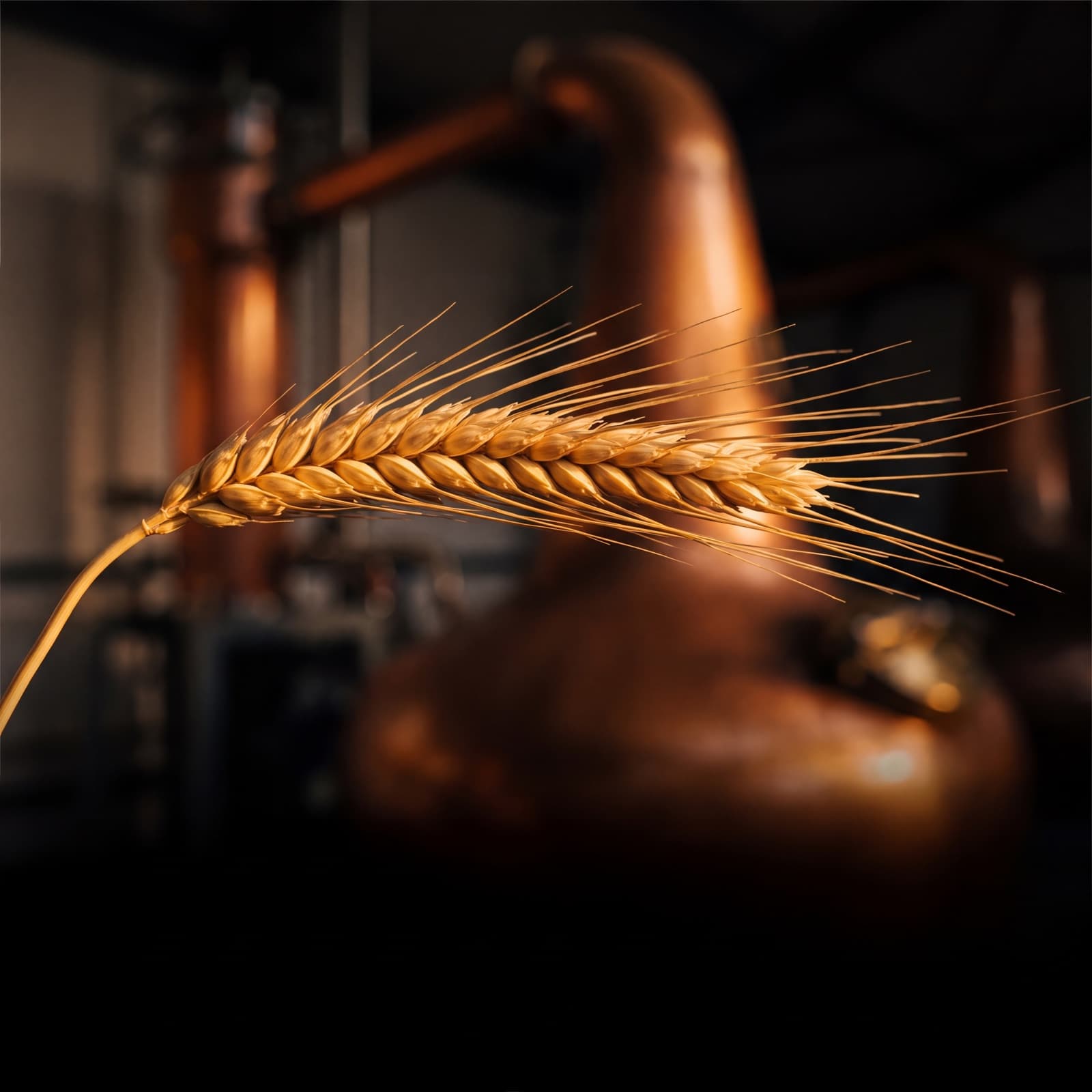
How a clear spirit ends up tasting of toffee, pears and Christmas cake. One grain of barley, followed from the malting floor through the mash tun, the washbacks and the stills, then into the cask for the silent years.
Chapters
- 0:00Three ingredients
- 1:19Barley and malting
- 3:57Grist and the mash tun
- 5:12Fermentation
- 6:25Distillation and the cut
- 7:40Why copper and still shape matter
- 8:21Blends and single malts
- 9:01The silent years
- 10:15Try it in the glass
Transcript
Three ingredients
Malt whisky is essentially made from just three things. You have your barley, your water, and you have yeast. You don't add fruit or spices or you know vanilla or liquid smoke from a bottle. and crucially the raw spirit that comes off the still is as clear as water. So how does a dram end up smelling like well toffee or bright pears or Christmas cake or even a bonfire? Welcome to episode one of Between Drams. In our welcome episode we made you a promise to follow a single grain of barley all the way from a muddy field to the glass in your hand. Today is the day we keep that promise and before we get going we should just quickly state plainly that we are AI voices but the stories and the science we're talking about today are completely real and checked. The short answer to where all of those wonderful flavors come from is really a journey of transformation. Every single step of the making process adds a very specific characteristic to the final liquid and the longest step of all happens in total silence locked inside a wooden cask over many years. But the foundation of everything is sugar. To get alcohol you need sugar to feed the yeast. The problem is that barley sitting in a muddy Scottish field doesn't actually have any
Barley and malting
sugar it only has starch. So we essentially have to steal its lunch money or trick the grain to get the process started. Okay tricking the grain just sounds I don't know a bit like a massive agricultural con job. Where exactly do you start with that? I mean we're starting with spring barley right? Exactly yeah it starts with spring barley which is planted in March or April and then harvested in the late summer. Some farmers and distillers care deeply about the specific variety of grain primarily because some yield more alcohol than others. Most people would never be able to taste the difference in the final glass though a few distilleries still bottle single farm or single get the sugar you need you have to make the harvested barley think it's spring again. You soak the grain in water and spread it out so it starts sprouting which well it wakes up internal enzymes inside the seed. Their entire job is to cut complex starches into simple sugars so the young plant can grow. Right so you're basically letting the plant do all the heavy lifting of unlocking the sugars for you but managing thousands of pounds of damp sprouting seed just sounds incredibly tedious to on an industrial scale. How did they traditionally manage all that grain without it you know just turning into a giant tangled garden? It was incredibly labor-intensive. Traditionally this happened on a malting floor turning the thick layer of damp grain by hand with heavy wooden shovels so it doesn't overheat or tangle all its tiny roots together. There's an old story people tell in the industry about monkey shoulder. The maltsmen who did this heavy shoveling day in and day out often developed a distinct stoop which earned that nickname. It actually inspired the name of a famous blended malt you can find today. Most places buy their malt from big specialists now but places like Balvenie, Highland Park, Springbank, Bowmore, and Laphroaig still keep traditional floor maltings going. That is a staggering amount of shoveling and I imagine you have to stop the sprouting at a very specific point right like before the plant just eats all newly created sugar itself. Is that what the drying process is for with those iconic pagoda shaped roofs you always see on old distilleries? Exactly right. You have to stop the process abruptly and those beautiful pagodas are actually the kiln chimneys. You dry the barley in a kiln to stop it growing and if you burn peat in that fire the smoke soaks right into the grain. We're going to tease that for now because where that peat comes from is the entire topic for our next episode. But whether you use peat or hot air what comes out of the kiln is now called malt.
Grist and the mash tun
If you chewed on a handful it tastes a lot like a crunchy biscuity breakfast cereal. Okay so we have our biscuity malt but all that sugar we just tricked the plant into making is still trapped inside a hard husk. How do we extract it so the yeast can actually get to it? I assume we have to grind it open? We do. The dried malt is ground into a coarse flour called grist and there's a use for this. These were Yorkshire machines built so perfectly and they were so robust that they simply never broke down. Because distilleries never needed to buy replacement parts the company eventually went out of business. It's just a fantastic story people tell about the perils of making something too well. Once you have that grist it goes into a massive vessel called a mash tun. So we're essentially making a huge batch of oatmeal at this point. The grist is mixed with water inside the mash tun and I think it's usually done in three goes right? Each batch hotter than the last? Yes the heat washes the sugar out of the grain creating a cloudy liquid called wort. It tastes very much like sweet porridge water or malty tea. And this is where the local water really matters. Distilleries are fiercely proud of their local burn spring or law.
Fermentation
Oh and the leftover husks which are called draff are scooped out and fed to local cattle. It makes for some very well-fed highland cows. It's nice that nothing goes to waste. So we have our sweet malty tea and happy local cows but we still just have sugar water. Where does the alcohol actually come from? This is where the yeast gets to work. The wort is pumped into tall washbacks. Some distillers swear by wooden Oregon pine or larch and others by modern stainless steel. Yeast is added and it eats the sugar to make alcohol and carbon dioxide.
Being in a distillery during this phase is just such a visceral experience. The liquid in those washbacks is foaming and frothing violently and some even have spinning blades that continuously knock the foam down. And the carbon dioxide is so intense that if you lean too close over the edge it physically makes your eyes water. When it all stops you're left with something called wash which is an eight percent alcohol liquid. So it's basically a rough cloudy beer with no hops. Exactly a hopless beer. But this is also a key flavor driver.
Distilleries that choose to let their fermentation run longer get a much fruitier spirit.
Distillation and the cut
During those extra hours the yeast creates notes that are full of apples, pears, and bananas. We've got some great fruit notes now but we still just have a flat beer sitting in a vat. How on potent clear spirit we know. That brings us to distillation. It's easy to see why ancient people thought this was practically magic but the science is quite light. Alcohol boils at a lower temperature than water. Gentle heat turns the alcohol to vapor first. It rises, cools, and turns back into a much stronger liquid. This is a double distillation process done in those beautiful onion shaped copper pot stills with swan necks. The wash still takes it to about 20 or 25 percent called low wines and the spirit still takes it to 70 percent. And this is where the still man makes the most important decision. The cut. Right because they don't just keep all the liquid that comes out.
They discard the harsh first liquid, the heads, and the oily tails at the end. They only keep the heart. Historically this all happened inside a gleaming locked brass and glass spirit safe under the strict eye of the excise officer. But I've always wondered about the stills themselves. Why are they specifically made of copper and does their physical shape actually matter that much?
Why copper and still shape matter
Oh the material and the shape are vital. Copper is essential because it actively cleans the spirit of heavy sulfury or meaty notes and the shape dictates the flavor. Tall stills like Glen Merengue's giraffe tall necks make the vapor climb a long way. Heavy flavors drop back down resulting in a very light delicate spirit. Short squat stills like Macallan's curiously small stills let heavy flavors carry over making a richer oilier spirit. Distillers are so fiercely protective of those shapes. There's the charming story they tell where if an old still wears out the coppersmiths copy it exactly. They even copy every accidental dent and bulge.
Blends and single malts
Completely terrified that changing the shape will alter the flavor of their whisky. What comes out of those carefully shaped stills is new make spirit. It's crystal clear, strong, and tastes of cereal in peardrops. Yes and before we move on we should take a quick second to clarify blends versus single malts. Blends mix this malt whisky with grain whisky. Grain whisky is usually wheat or maize run through a continuous column still for a softer spirit. That column still was patented in 1830 by an Irishman and former excise officer named Aeneas Coffey. Blends like Johnnie Walker expertly mix dozens of malts and grains for consistency
The silent years
but single malt means only malted barley from pot stills at a single distillery. Okay that makes sense. So we have our fiery new make from our pot stills but by law it isn't scotch until it spends at least three years waiting in the dark. These are the silent years. And those silent years are crucial. The cask gives all the natural color and softens the harsh edges and it's widely considered the biggest single influence on flavor. There are three cask rules we should quickly cover. First most casks use our former bourbon barrels because American law dictates bourbon must use brand new barrels sending the used ones across the Atlantic. Second other casks once held sherry which imparts a rich dark Christmas cake character. Third over the years the spirit breathes through the wood and a little evaporates away into the air a phenomenon known as the angel share. And because Scotland has such cool damp weather maturation is very slow. That's why a 12 year old label means the youngest drop is 12 years old. And just a brief honest note on caramel coloring. A little is allowed for color consistency and it doesn't change the taste in a noticeable
Try it in the glass
way but it's worth knowing so a dark color doesn't fool you into thinking a whisky's older than it is. Which is exactly why some labels proudly state natural color. It's good to keep in mind. So just a plain recap for someone pouring a dram right now. Barley and mashing bring the cereal and biscuit notes. Fermentation brings the fruit. The stills and the cut dictate if it's light or heavy. Peat smoke if used brings the bonfire and the cask provides the color vanilla spice and softens the whole thing. Same three ingredients completely different results. I highly recommend trying two whiskies side by side to hear this episode in a glass. Try Glenmorangie Original from those giraffe tall stills and bourbon casks for light vanilla and orange notes. Then try it next to a Glenfarclas 12 or Macallan Sherry Oak 12 where short stills and sherry casks give a rich dark dried fruit character. That is a brilliant comparison to try at home and if a whisky from the episode catches your ear you can look it up in Dramour and save it. Also if you can you really should go on a distillery tour just to smell the sweet porridge in the mash house and feel the warmth of the still house. It's an incredible experience. Next time we're going to explore where the smoke comes from going back to the fire under the kiln a windy treeless island and thousands of years of bog. Thanks for listening to Between Drams.
Listen in the app
Pour along at home.
In Dramour, Between Drams plays on in the mini player while you browse, with live captions and chapters to jump between.