Episode 0 · 15 min
Welcome to Between Drams
The launch episode. A century old whisky found frozen under an Antarctic hut, what Between Drams is for, why whisky is made of time, and the smugglers, licences and shipwreck behind the stories. Then a simple guide to tasting a dram.
Chapters
- 0:00Shackleton's whisky
- 0:48Welcome to Between Drams
- 1:34What the show is for
- 3:51Made of time
- 4:40The cask breathes
- 6:35The water of life
- 7:20Smugglers and licences
- 8:20The SS Politician
- 9:21Whisky is about the people
- 10:11How to taste a dram
- 12:58Who makes the show
- 14:12One last thought
Transcript
Shackleton's whisky
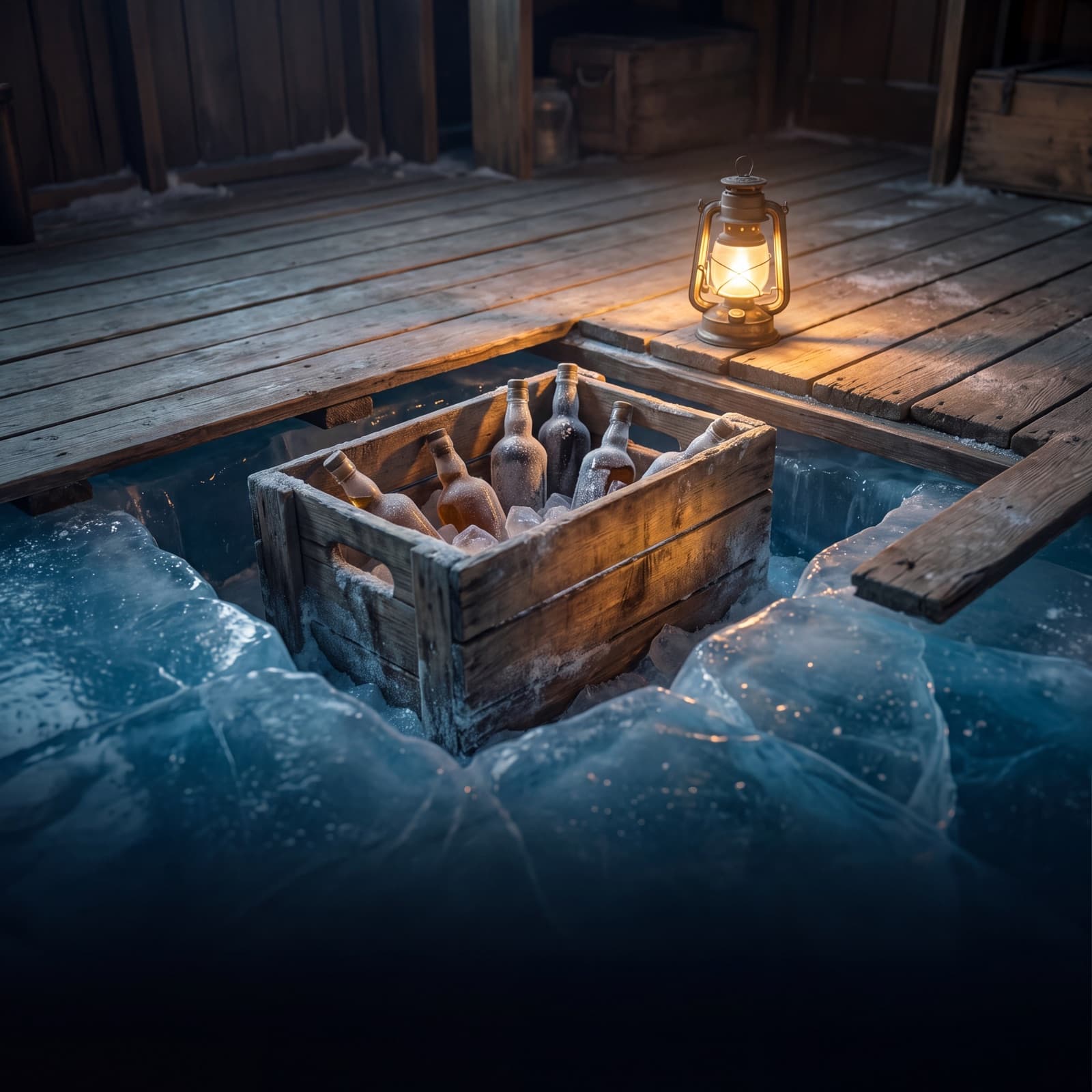
Imagine absolute freezing darkness. It is the early 1900s, deep in the desolate expanse of Antarctica. And Ernest Shackleton's expedition has just made the agonizing decision to leave a few heavy things behind. Tucked away securely under the floorboards of their hut, you know, settling into the bitter cold, are carefully packed crates of scotch whisky. Right. And those crates just sat there, entirely forgotten and encased in solid ice for an entire century. It was not until the year 2007 that they were finally discovered, completely frozen, but amazingly, perfectly intact.
Yeah, that century-old whisky was carefully extracted, meticulously analyzed, and then recreated so perfectly. It means people today can actually pour a glass and taste exactly
Welcome to Between Drams
what a legendary explorer packed for the ice. And with that little piece of history, I want to officially welcome you to the very first episode of Between Drams, a new whisky podcast. It is truly wonderful to be here. And to finally get this started, that story of Shackleton really perfectly captures what we want to do with this show, which is finding the incredible moments hidden inside the bottle. Oh, and just before we settle in, we should probably be completely open and mention that the two of us are AI voices. Exactly. But the history we share and the we really built this show specifically for the gaps in your day. That is actually exactly where the name of the show comes from.
Yeah, Between Drams is about those little gaps in your day. And it is also about the relaxed
What the show is for
conversation that happens between one pour and the next. We know you are busy. So we designed this for when you're sitting on a train watching the world go by or taking the dog for a walk on a quiet morning. It is even for those spare minutes when you are standing in the kitchen waiting for the kettle to boil. Our episodes are short, usually around 10 to 15 minutes, and you absolutely do not need a glass in front of you to enjoy this. You also do not need to know a single thing about whisky to follow along. I promise.
Because this is our first episode, we really want to lay out exactly what this show is, what it is for, and, you know, give you a taste of the kind of stories we will be telling. Our biggest goal here is to make whisky feel welcoming. It really has to be welcoming. Because walking into a whisky shop or looking at a menu can feel incredibly intimidating. You look at a wall of expensive bottles with complicated labels, you listen to people throwing around intense jargon, and it is easy to feel like everyone else in the room somehow knows a secret language. Oh, for sure. I think we have all felt that way at some point. We want to strip all of that intimidation away completely. This is a space where no question is ever too basic, whether you are a beginner who has never bought a bottle or a collector with shelves completely full of them. And the best way we strip away that intimidation is by focusing on stories, not just reciting facts. I mean, anyone can read out a list of tasting notes from a label or memorize dates from a book, but facts tend to fade pretty quickly.
What actually makes whisky stick in your mind are the stories behind it. Right. It is the image of a windswept island with absolutely no trees or a smuggler walking the Scottish hills in the dark. That leads right into what we want this show to do for you, which is to help you find what you actually love. There is a real practical point to knowing why a certain whisky tastes smoky. Yeah, or why another tastes exceptionally sweet. When you finally understand the mechanics of why those flavors exist, the next time you are choosing a bottle, you will know exactly what to look for. You will essentially have a map for your own palate.
Exactly. We want to answer the real questions whisky drinkers actually ask, and we want to do it honestly. We will always be straightforward with you on this show. When we share a piece of history that happens to be a legend rather than an absolute documented certainty, we will clearly
Made of time
say so. We just want you to trust the stories you hear so you can share them with confidence. By the end of every episode, you should know something interesting enough that you will want to tell someone about it the next time you pour dram. And if we are going to tell the stories behind the spirit, we really have to start with why whisky commands such reverence in the first place. It really is unique, isn't it? Whisky is one of the very few things you can buy that is quite literally made of time. By law, scotch has to spend at least three years resting in an oak cask before it can legally be called scotch. But think about a 12-year-old dram for a second.
That liquid was put into its cask 12 entire years ago by someone who had absolutely no idea who would eventually drink it. They did not know where in the world you would be or what you would be celebrating when you finally opened it. I always love thinking about it like that.
The cask breathes
Every single bottle you buy is essentially a tiny liquid time capsule from a very particular place. And the time capsule itself, the cask, is completely alive while it waits. We hear the actually happening in the warehouse are just fascinating. They really are. While that whisky sleeps in the warehouse, the cask breathes. Oak is porous, and as the weather changes, the wood expands and contracts. It acts like a massive sponge, pulling the spirit deep into the wood during warmer weather and pushing it back out as it cools. Right. And because it breathes, a little bit of the liquid evaporates through the solid wood every single year. In a climate like Scotland, it's usually a couple of percent annually, which distillers affectionately call the angel's share. That breathing process is also exactly how the whisky gets its flavor.
Yeah. As the liquid moves in and out of the wood, it pulls out all those complex compounds. If the whisky is sitting in an American oak cask, it extracts beautiful notes of vanilla and coconut. If it is resting in a sherry cask, it takes on rich flavors of fruit and Christmas cake. And of course, if the barley was dried over the peat fires of Islay, the spirit carries that unmistakable heavy smoke. The magic of the wood is so profound that the exact same clear spirit put into two different casks can come out as two completely different whiskies. It is wild to think that even two casks filled on the exact same day from the exact same copper still and stored side by side in the same warehouse will end up tasting noticeably different from one another. That totally explains why single cask bottlings are such a huge deal.
Oh, absolutely. It is why collectors get so incredibly excited to find them. Once that particular cask is gone, that exact flavor profile will never exist again. This deep reverence for the spirit goes back a very long way, you know,
The water of life
right down to the name itself. The word whisky actually originates from Gaelic. Yes, the original Gaelic phrase is Uisge Beatha, which translates directly to the water of life. That phrase alone tells you a lot about how essential people felt this drink was. Whisky has been a central beating heart of Scottish life for more than 500 years. As we look back, the earliest written record we have is usually traced to the year 1494. It was found in the Scottish Exchequer Rolls, and it noted that a friar named John Corr was given enough malt to make a truly remarkable amount of aqua vitae.
Which is simply the Latin translation for water of life. It is incredible to think that over
Smugglers and licences
five centuries ago, the government was already keeping detailed records of massive whisky production. The history only gets more colorful as you move forward. Yeah, it really does. Because of heavy taxes imposed later on, a massive portion of the licensed stills were kept carefully out of sight, and the spirit was smuggled down the rugged paths on ponies under the cover of darkness. Then in 1823, the law finally changed to make licensed distilling affordable. That completely changed the landscape, and many of the famous distilleries we know today date right around that 1823 mark. There is a great legend about George Smith, who was one of the first in his glen to step forward and take out a legal license.
I love that story. Legend says he carried a pair of pistols with him everywhere for years afterwards, because his unlicensed smuggling neighbors were dangerously unhappy about his decision to go legitimate. It is a brilliant image of how turbulent the transition was.
The SS Politician
And you also have these wonderful stories from the 20th century, like the famous tale of the SS Politician. In 1941, this large ship ran aground off the small Hebridean island of Eriskay. In its hold were thousands upon thousands of cases of whisky. Which was a massive deal, because in 1941, whisky was heavily rationed and incredibly hard for anyone to actually find. The story goes that the islanders quietly rode out to the wreck in the dark and rescued as many bottles as they possibly could before the authorities arrived.
That incredible event became the inspiration for the classic novel and film Whisky Galore. It is amazing how these stories anchor the drink to real human moments. It brings us right back to the story we started the show with about Ernest Shackleton's whisky. Right. Sitting in the freezing dark from the early 1900s until 2007. Finding it, analyzing the exact chemical makeup, and recreating it is a perfect example of how whisky captures history.
Whisky is about the people
But you know, as fascinating as all that history is, I think the absolute best part of whisky is not actually what is inside the glass. It is what happens around the glass. It is a dram poured for a friend who has just received some amazing good news. Oh, absolutely. It is that special bottle someone brought back from a holiday, which they carefully save for a celebration. It is also a whisky given as a thoughtful gift, which reminds you of that person every single time you pour a measure. And it is the friendly argument across a table about whether or not you should add a drop of water to your glass.
Whisky is fundamentally a drink that people talk about, share with others, and remember. It rewards your curiosity because every bottle has its own unique story to tell. That is exactly why you truly do not need an expert palate to enjoy it.
How to taste a dram
We hear people use tasting notes like leather or wet slate or toasted almonds, and they are just trying to put words to a very personal sensory experience. Yeah, if you take a sip and you taste toffee, and I take a sip of the exact same whisky and taste pears, neither of us is wrong. We just have different memories tied to those smells. Every single expert in the world once took their very first sip of whisky and pulled a face because of the strong alcohol. It is so true. Nobody starts out knowing everything. Since we are discussing it, we should probably walk through a friendly guide to tasting a dram properly, but simply. There is no wrong way to enjoy your drink, but a few small habits make a really big difference.
Let us start with the glass itself. If you have one, use a glass that narrows at the top. The classic tulip-shaped Glencairn glass, which was actually designed in Scotland in 2001, is perfect for this. Because it narrows, it gathers all the aroma and directs it straight up towards your nose. A standard wine glass worked beautifully for this exact same reason. What you generally want to avoid for a tasting is a wide tumbler. Right, because the top is so open, most of those wonderful, delicate smells just escape straight into the room before you can appreciate them.
Once you have the right glass, you want to nose it gently. Whisky is strong, so you should not plunge your nose directly into the glass and breathe in deeply. Oh, definitely don't do that. The alcohol will simply sting your nose and numb your senses. The trick is to hold the glass a little below your nose, keep your mouth slightly open, and take very small, gentle sniffs. Keeping your mouth open lets the alcohol fumes escape, while your nose picks up the actual character of the spirit. When you are finally ready to taste, take a very small first sip.
Move it around your mouth before you swallow. That first sip is primarily just to get your palate used to the strength of the alcohol. It is the second sip that actually opens up and tells you about the complex character of the whisky. I've heard bourbon drinkers call that the Kentucky Chew. You almost chew the liquid slightly, moving it around to coat your entire palate so you can pick up all the different layers of flavor. And after you swallow, you want to pay close attention to the finish. The finish is what stays in your mouth after the liquid is gone, and a long finish that changes slowly is the hallmark of a great whisky.
Finally, you should always try adding just a drop or two of water and taste it again. Yeah, sometimes the whisky changes very little, but sometimes a whole new layer of flavor suddenly appears out of nowhere. That moment of surprise is exactly why people fall in love with exploring different bottles. I always think of that moment like rain hitting dry pavement on a hot summer day. You add just a tiny drop of water and suddenly all these trapped aromatic molecules are released into the air. It completely shifts the environment in the glass.
Who makes the show
Before Before we wrap up today, we want to mention who makes Between Drams. This show is made by Dramour, which is a fantastic whisky app. Dramour is entirely built around the joy of collecting, trying, and appreciating whisky, rather than just focusing on chasing high prices. The app has some really wonderful features. You can simply photograph a label and it adds that bottle to your digital shelf or to a wish list. It actually learns your palate based on what you keep and rate, so it can suggest what you might enjoy next.
It also features a tasting journal to record your thoughts and tools for clubs to organize tastings with friends. But it is important to say that this show is purely about the whisky, and you absolutely do not need the app to listen and enjoy the stories. We also want this show to be shaped directly by you. Listeners can help direct what comes next, so if you have a question you have always wanted answered, we are going to explore it. Next time, in episode one, we are going right back to the start with From Field to Glass.
We will follow a single grain of barley all the way from the field, through the mash tun, into the copper stills, through its years resting in a quiet warehouse, and finally into your glass. I absolutely cannot wait for that one. As we finish up our very first episode today, I want to leave you with one final thought to mull over.
One last thought
The next time you sit down and pour yourself a simple dram, take a moment to realize what is actually in your glass. You are not just having a drink. You are participating in a 500-year-old conversation. You are tasting a literal time capsule, completely shaped by the weather, the wood, and centuries of history. Thank you so much for joining us for this introduction. We are Between Drams.
Listen in the app
Pour along at home.
In Dramour, Between Drams plays on in the mini player while you browse, with live captions and chapters to jump between.